
Purpose, ambition and member ownership: What makes co-ops work
All four leaders begin from a common conviction that the co-operative model has an enduring advantage – clarity of purpose and alignment with members, not shareholders.
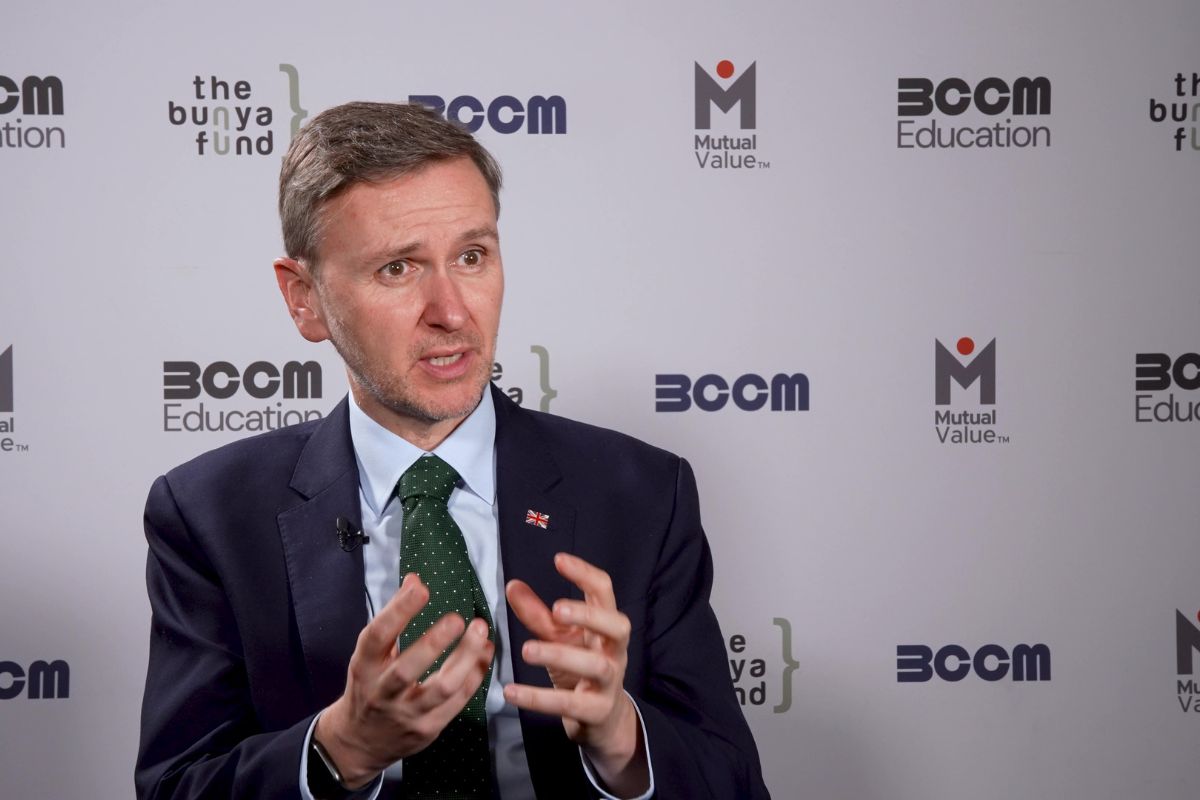
Andrew Pakes MP, the UK Government’s Envoy for Co-operatives and Mutuals, puts it bluntly:
“I think being clear why you're here, what problem you are trying to solve, the thing you exist for – if you can get those combinations together, you have a greater chance of success.”
For Shirine Khoury-Haq, CEO of The Co-operative Group, commercial discipline and member responsiveness must work hand in hand.
“It has to be commercially successful… Then the next question is, what does it do with that success? And what does it do for its members as a return on capital… and as a return on the trust that members have invested.”
Kevin Parry OBE, Chairman of Nationwide Building Society, is equally direct:
“Quality of management… there should be no compromising on that… and have the ambition to be successful. Complacency… is not going to be a successful story.”
At the global level, Jeroen Douglas, Director General of the International Co-operative Alliance, captures the essence:
“Members are owners. They not only have a fair say in the company but also get a fair share of the profits. And that is what is most important.”
Despite differing vantage points, the message is consistent: Co-operatives succeed when they combine purpose, professionalism, ambition and member alignment.
The opportunity: A moment to seize
As the UK Government’s envoy, Andrew Pakes is tasked with overseeing a commitment to double the size of the mutual economy. A self-described “evangelist” for the movement, Pakes believes that there has never been a more important time for co-operatives and mutuals to demonstrate the role they can play in rebuilding economies.
“The world's in a really divided state at the moment,” he says. “You've got the rise of populist governments and the social division we're seeing in many parts of the world. We know that bringing people together from the neutral centre creates an antidote to some of that populism."
“It's our time to shine and it's a moment for us to seize. I think the challenge for us as a movement is: How do we get better at making the economic case for mutualism to government and decision makers?”
The UK ambition: Doubling the sector
The UK government’s landmark commitment to double the size of the co-operative and mutual economy is a case in point. Pakes describes both the opportunity and the challenge:
“I think for too long we’ve lacked ambition within the movement…so being able to have a compelling story that says, we're part of the solution is really important. The real challenge now is what does that mean in practice now that we are in government. ” He points to the establishment in the UK of the Co-operatives and Mutuals Business Council, which has recently delivered its first report into the value of credit unions with recommendations to government for changes to regulations that would encourage further growth in this sector. “We've got the ambition to say the mutual sector needs to be part of rebuilding an economy that works for working people.”
Watch Andrew’s full Leaders’ Summit Opening Address.
Parry, who is chairman of the newly formed Council, sees the Starmer government’s commitment to double the size of the sector as a turning point:
“It’s a very important signal that the government is supportive of mutuals and co-ops… but I think it’s fair to say there wasn’t an awful lot of depth to that commitment. We decided that the best way forward was to work with government to help achieve it…”
Read Kevin’s full ‘March of the Mutuals’ Taste of Australia Dinner address.
And while some growth will occur inorganically, such as Nationwide’s recent purchase of Virgin Money and Coventry Building Society’s move to bring the Co-op Bank back into the sector, there is a shared view that the sector must help shape its own future.
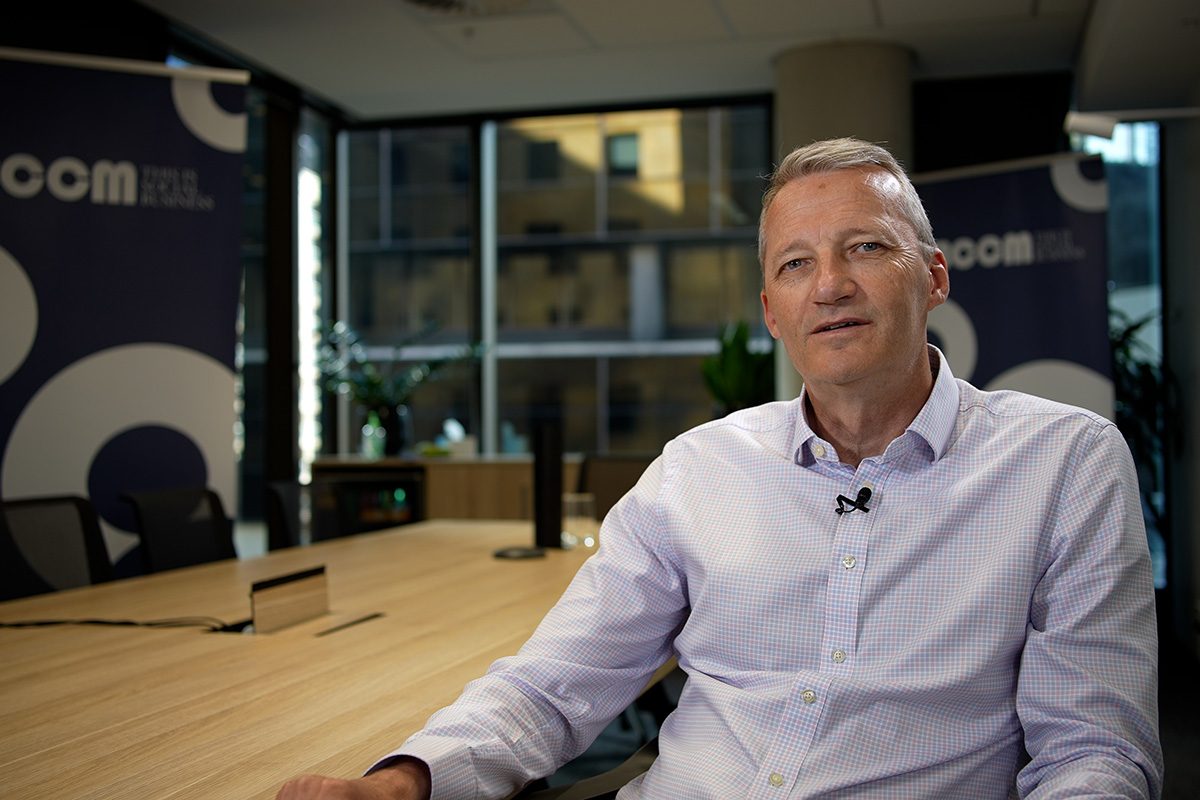
Khoury-Haq, who presides over one of the UK’s largest consumer co-ops with more than six million members, believes much of the responsibility lies with co-ops themselves:
“There's been an obligation to define where exactly we can move into to be able to realise that ambition… and to articulate very clearly what we need government to do… to enable that.”
Watch Shirine’s full Business Leaders in Conversation Leaders' Summit interview.
Australia, watching closely, can take note of both the political opportunity and the sector-led discipline behind the UK’s progress.
Strengths and weaknesses: A moment for self-reflection
Across all four conversations, leaders acknowledged the inherent strengths of the model – but also the internal risks.
Khoury-Haq points to values-based resilience:
“We are very focussed on equity… we are focussed on equality and that enables us to row forward when others are rowing back. We're focussed on ensuring that we serve our communities as well.”
Parry stresses the financial advantage of retaining all profits for member benefit:
“We can invest back into our members… We're not in the position where we need to pay distributions to external shareholders.”
But he also flags the hazard of comfort:
“You've got to watch against complacency because you don't have that external shareholder pressure… that falls on the board of directors.”
Khoury-Haq calls out two global challenges:
“We could do a lot more by working together especially on social issues that are impactful globally.” She also cites the restrictions in some countries (including the UK) around how co-ops can raise capital, reinforcing the need for legislative changes.
Douglas, from the ICA, sees an even broader issue: Visibility.
“We are working hard on our PR… to show the world the beauty of the co-op and mutual world… an alternative market model is possible, where people are first.”
The sector’s strengths – member ownership, long-termism, equitable distribution – are powerful. But leaders agree the movement must be bolder, louder and more coordinated.
A global stage: CM50 and the co-operative “Davos”
Douglas is spearheading one of the most ambitious global initiatives the movement has seen in decades: Co-operatives and Mutuals 50, a C-suite leadership circle designed to elevate co-operatives on the world stage.
Immediately following the Leaders’ summit, Douglas travelled to Doha to launch CM50, which he describes as "the beginning of a contract for a new global economy…” The manifesto of CM50, made up of leaders of some of the world’s largest member-owned businesses, seeks to enlarge the market share for co-ops and mutuals globally.
Visibility, he argues, is now existential: “It was Barack Obama who said that co-ops are the best kept secret… if we…become our own co-operative Davos, we will be given exposure to a much larger audience…”
The logic is simple: Stronger global collaboration, greater influence, faster growth.
“We believe that by bringing those leaders together in one group, it will have a positive trickledown effect to their regions and countries.”
A shared message for Australia
While their roles differ, the advice to Australia’s sector is strikingly aligned:
- Be ambitious – about growth, influence and capability.
- Be disciplined – in governance, strategy and execution.
- Be unified – because scale and coordination amplify impact.
- Be proactive with government – and make the economic case clearly and confidently.
As Pakes notes: “We've got to be at the top of our game… If we want the government to trust us…we've got to be sharp… and compelling.”
These interviews were recorded at the 2025 BCCM Leaders’ Summit in Adelaide. The next BCCM Leaders’ Summit will be held on 20–21 October 2026 at the Sofitel Sydney Wentworth, with registration details to be announced soon.